
 I have loved skin care for nearly 10 years and find such joy in doing my skincare routine every morning and evening. I’ve seen amazing results from diligently taking care of my skin and figuring out the right products for my concerns. It can take some time to determine what those products may be and what exactly your skin needs so it’s best to start out slow and small with your skincare routine. First figure out what your skin type is (dry, oily, combination, etc) and then look for products that are suited for that skin type. Once you have identified the basics and built a solid skincare routine, it is fun to explore newer launches and trending ingredients to see what may be a fit for your skin. Technology continues to evolve and skincare products become better and better every year.
Peptides were an ingredient I began hearing about a year ago and did a bit more research into to determine if my skin would benefit from adding them in. Turns out peptides were exactly what I was looking for so I started exploring different formulations to see which I liked. Not all peptide serums are the same and many can address different concerns with additional ingredients. I have tried quite a few and found a handful of formulations that I really enjoy. I am going to share a roundup of the best peptide serums I have used and who I think they would be best for.
How to Find the Best Peptide Serums
 Peptide serums have been around for years but have been increasing in popularity over the past few years. More brands are experimenting with their own formulations and I can personally attest to the benefit of adding them to a skincare routine. I began incorporating peptides into my routine in the last year and can really see a difference in the firmness of my skin. Fine lines that show up don’t deepen as quickly and my skin has a suppleness to it when I use them regularly. While all ages and any skin type can benefit from peptide serums, more mature skin types are the ones who will see the most drastic results.
What Is a Peptide Serum?
A peptide serum is a serum formulation that contains a variety of different types of peptides in it. Peptides are short chains of amino acids that can provide a ton of great benefits to the skin. Peptides are the building blocks of proteins. In a broader sense, peptide serums can help to improve skin firmness and elasticity while some formulations can additionally help to hydrate the skin and improve texture and tone over time.
What Does a Peptide Serum Do?
Each peptide serum is formulated differently so there could be additional skin health benefits depending on the one you choose, but for the most part these are the benefits of peptide serums when added to a skincare routine.
Boost Collagen Production
Collagen is quite the buzzword these days because collagen provides elasticity and structure to the skin. As we age, collagen production drops which results in skin that is less firm. Peptides can help boost collagen and elastin production in the skin giving it that youthful suppleness. It will not completely provide the same level of firmness that your skin had in your 20’s but it definitely can help bring some of that bounce and plumpness back to your skin.
Strengthens the Skin Barrier
Focusing on skin barrier health is often overlooked in skincare routines but can be one of the most important steps in having healthy skin. If your skin barrier is damaged, it can appear sensitive, easily irritated, inflamed, flaky, etc and can’t perform at its highest level until it gets back in balance. Peptides help to strengthen the skin barrier making it more resilient to environmental damage or mild irritation.
Improve Skin Texture
Skin texture goes hand in hand with skin barrier function. A healthy skin barrier often means your skin texture is smooth, firm and supple. Peptides can aid in this and depending on the formulation of the peptide serum, can also help to reduce the appearance of enlarged pores.
Increase Skin Hydration
Peptides can attract and help retain moisture in the skin leading to increases in your skin’s level of hydration.
Plump the Skin
By increasing the level of hydration in your skin, it will appear more plump. Skin will also look more plump and bouncy by the increase in collagen production that the peptides will stimulate.
Reduce Fine Lines
With the ability to plump the skin and increase collagen production, peptides can help reduce the appearance of fine lines and wrinkles. This is one of the main results I have personally seen using peptides regularly in my routine.
Reduce Inflammation
Certain peptides can help to reduce inflammation and sensitivity in the skin.
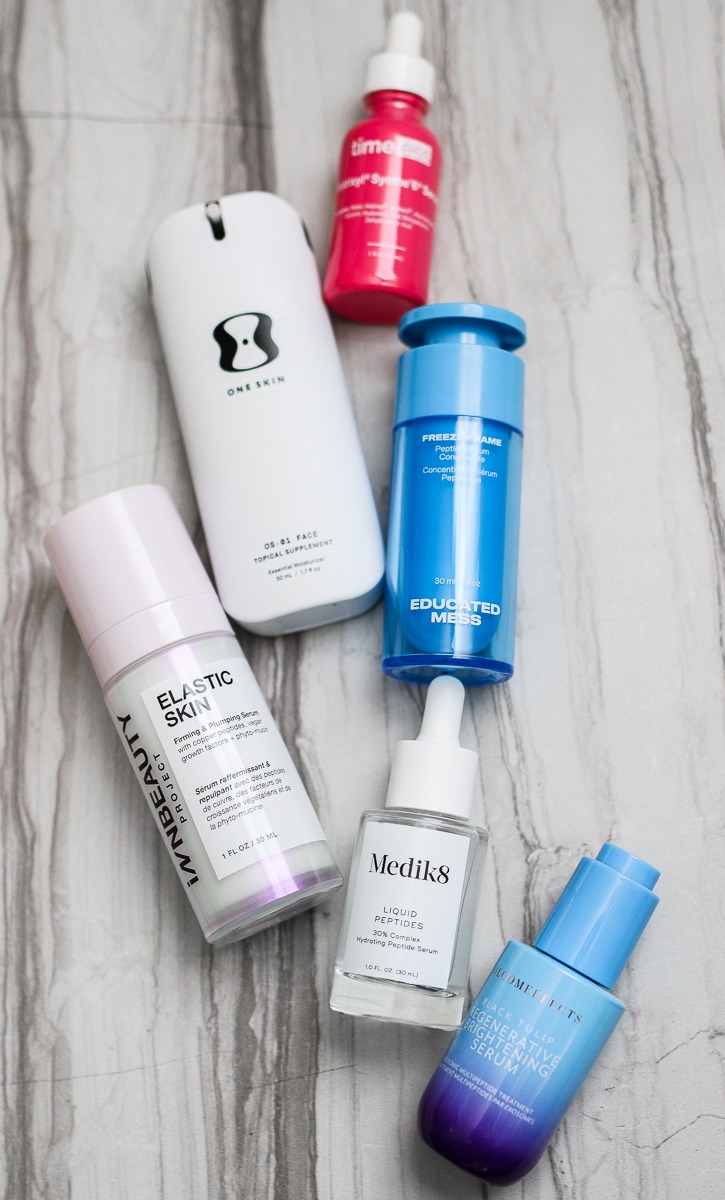
What Are the 7 Best Peptide Serums?
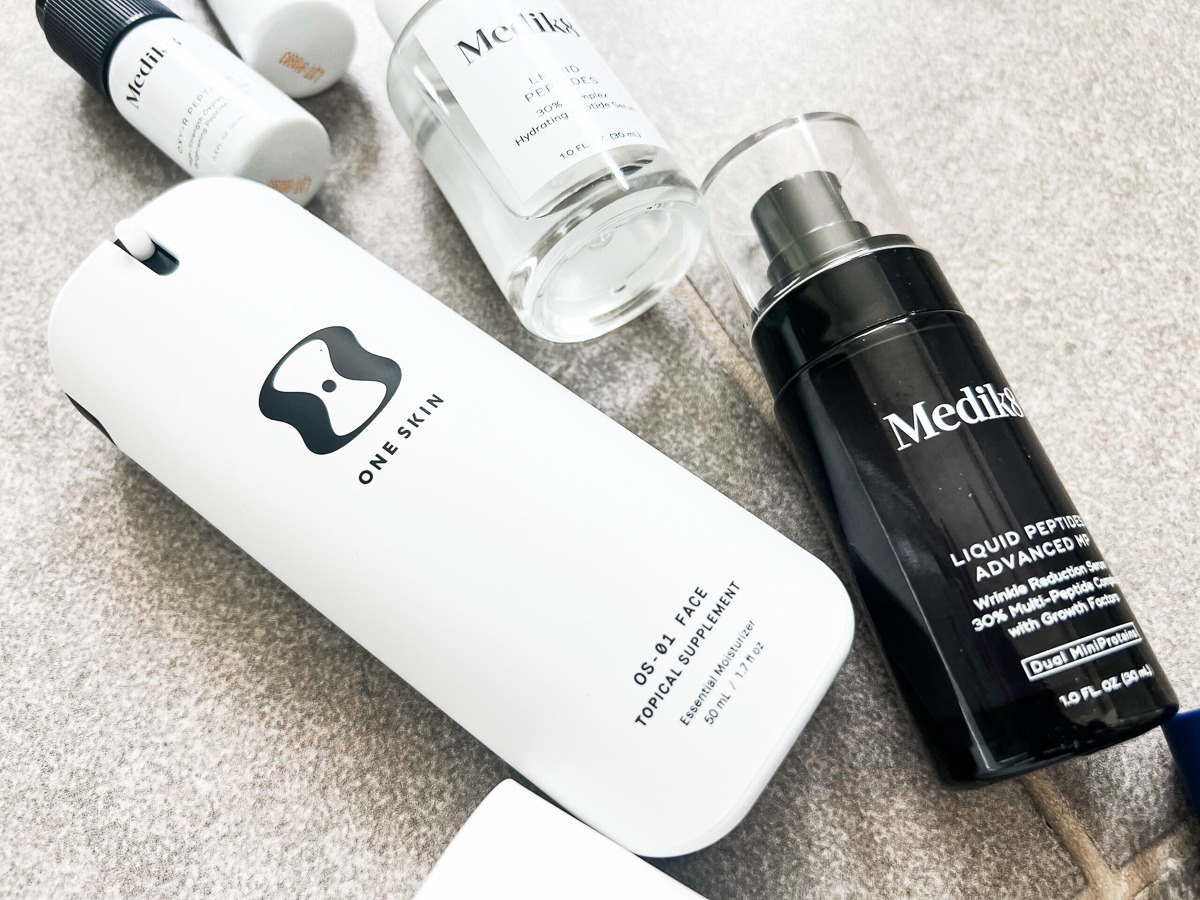
Medik8 Liquid Peptides
Many hydrating serums focus on simply providing moisture. But the Medik8 Liquid Peptides hydrates as well as visibly plumping the skin. From the first time I used this serum, I could instantly notice a difference! My skin immediately looked firmer, more supple and fine lines were noticeably smoothed. You may notice a sticky or tacky texture when using this which is totally normal. This serum is thick but provides really definitive results! If you want to combine both a hydrating formula (one of the key ingredients is hyaluronic acid) with a targeted fine line treatment, this is a great choice.
OneSkin OS-01 Skin Supplement (discount code: MAREE15)
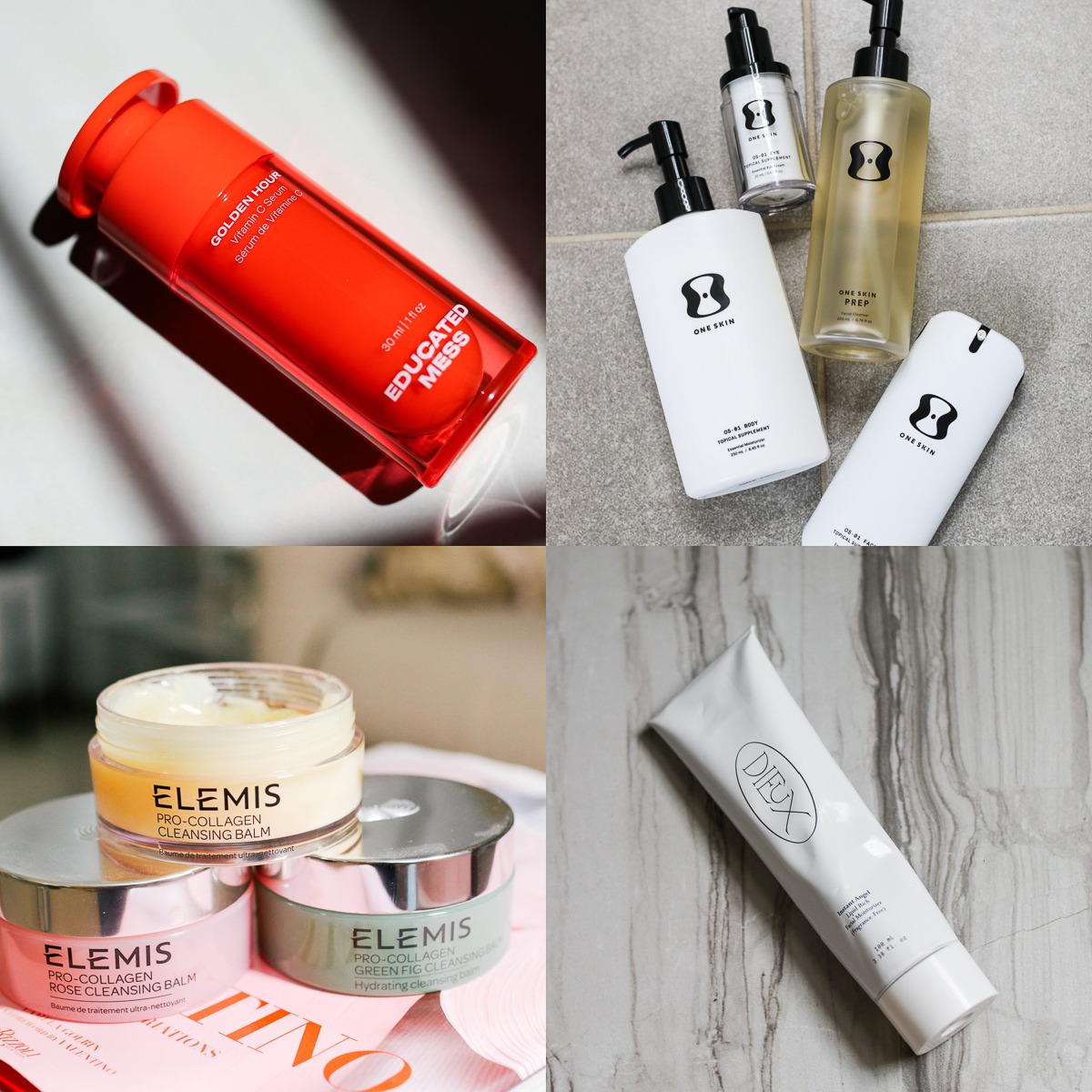
All of the peptide serums that I shared in this post are a liquid formulation, but the OneSkin OS-01 Skin Supplement is a lightweight gel cream. I LOVE the texture and can use it either as a lightweight moisturizer or a serum underneath a heavier/richer moisturizer. The science behind OneSkin products is truly remarkable and they are one of the first companies to focus on skin longevity rather than just targeting anti-aging concerns. The OS-o1 peptide can penetrate deeper layers of the skin while still remaining stable. It targets the root causes of aging and helps the skin look and feel healthier. This formula treats fine lines and wrinkles, while helping even out the skin tone, reduce the appearance of enlarged pores and improve skin barrier function. You are truly getting so much just in one product!
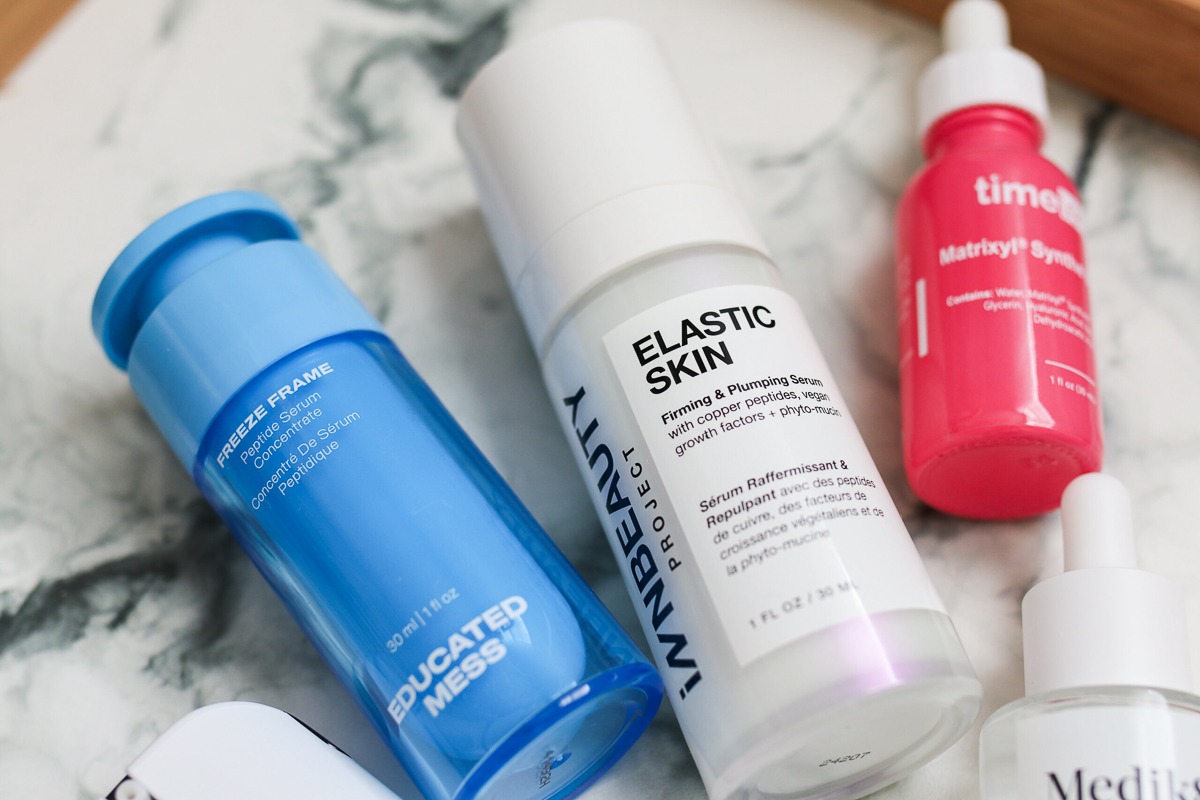
Educated Mess Freeze Frame (discount code: MAREE15)
This peptide serum has been on my radar for the past year and was so excited to finally test it. This formula contains three advanced peptide complexes to deliver instant firming results as well as long term plumping and lifting benefits. It has a slight tingling/cooling effect when on but I love how FIRM it makes the skin. Wow! You can definitely feel the tightness a few minutes after applying it. For those who struggle with deep lines and wrinkles, this is a great option!
INNBEAUTY Elastic Skin
This is a peptide serum that also contains vegan growth factors. The texture of this is a bit sticky and can feel a bit different if you aren’t used to it. I personally love how it feels and how bouncy it makes my skin! In addition to helping improve skin’s elasticity and firmness, it contains ceramides to help support the skin barrier.
Timeless Skincare Matrixyl Synthe’6
For a wonderful affordable peptide serum option, the Timeless Matrixyl Synthe’6 is a great choice. The texture is very similar to the Medik8 Liquid Peptides and is designed to target mostly fine lines and wrinkles. In addition to various peptides, the formula contains hyaluronic acid to help retain moisture in the skin. The firming effects are not as immediate or noticeable with this as with some of the other formulas that I mentioned, but over time it left my skin well hydrated and firm.
Dieux Deliverance Antioxidant Serum for Calm and Even Skin
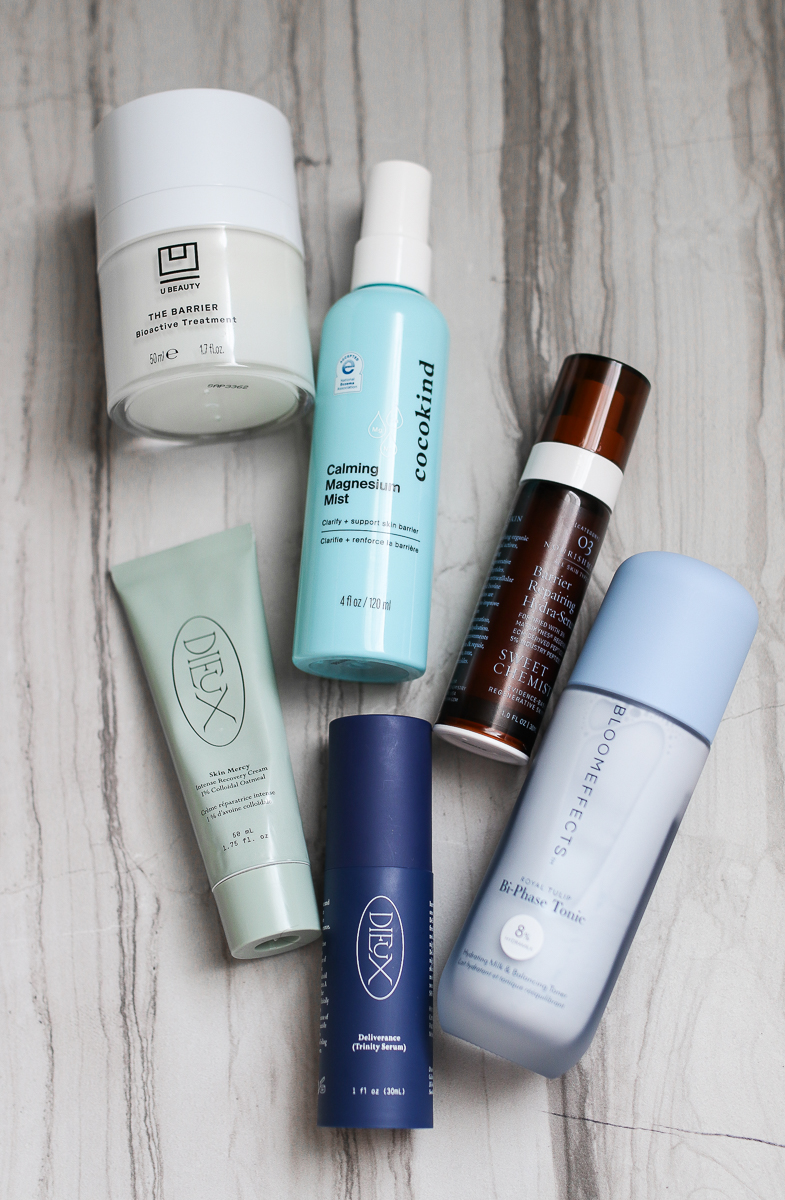
The Dieux Deliverance serum is an example of a formulation that contains peptides which contributes to helping firm and smooth but the main focus of serum is to help calm the skin and support the skin barrier. This will address fine lines and loss of elasticity but will also target redness, a damaged skin barrier and uneven skin tone. If you find yourself reacting to many peptide formulations or have sensitive skin, this may be a great option to try!
Bloomeffects Black Tulip Regenerative Brightening Serum (discount code: Maree)
Bloomeffects is a brand I discovered within the past year but quickly fell in love with all of their formulations. This serum contains many of the ingredients that are incredibly popular at the moment all in one product. This serum combines brightening peptides to help brighten and illuminate, exosomic peptides to boost elasticity and firmness, copper peptides to target deep wrinkles and plant-derived growth factors to regenerate and repair the skin. It is truly a powerhouse of a formula!
When to Use a Peptide Serum?
Each peptide serum formulation is different so be sure to look at the directions on the box or retailer’s website. But my rule of thumb is that I will add in a new serum into an existing skincare routine. I don’t like to try multiple new products at once so I will only try them one at a time to ensure I don’t have a reaction and to see the results more clearly. The key to applying skincare is to layer the products thinnest to thickest so apply the peptide serum after cleansing and toning but before your moisturizer. If you are using it with other serums, apply the thinnest serum first.
How to Use a Peptide Serum?
Apply morning and evening
Peptides are suitable to use in both your morning and evening skincare routines.
Layer with other active ingredients
Peptides are increasingly popular because they work well with almost any other active ingredient such as retinol, vitamin c, etc.
Let it dry down
With some peptide serums that have a distinct thicker and more viscous texture, it is best to let it dry down for a minute or two before layering something else on top. In my own experience, I find that if I layer too quickly over thicker peptide serums, there is a chance of pilling.



Comments