
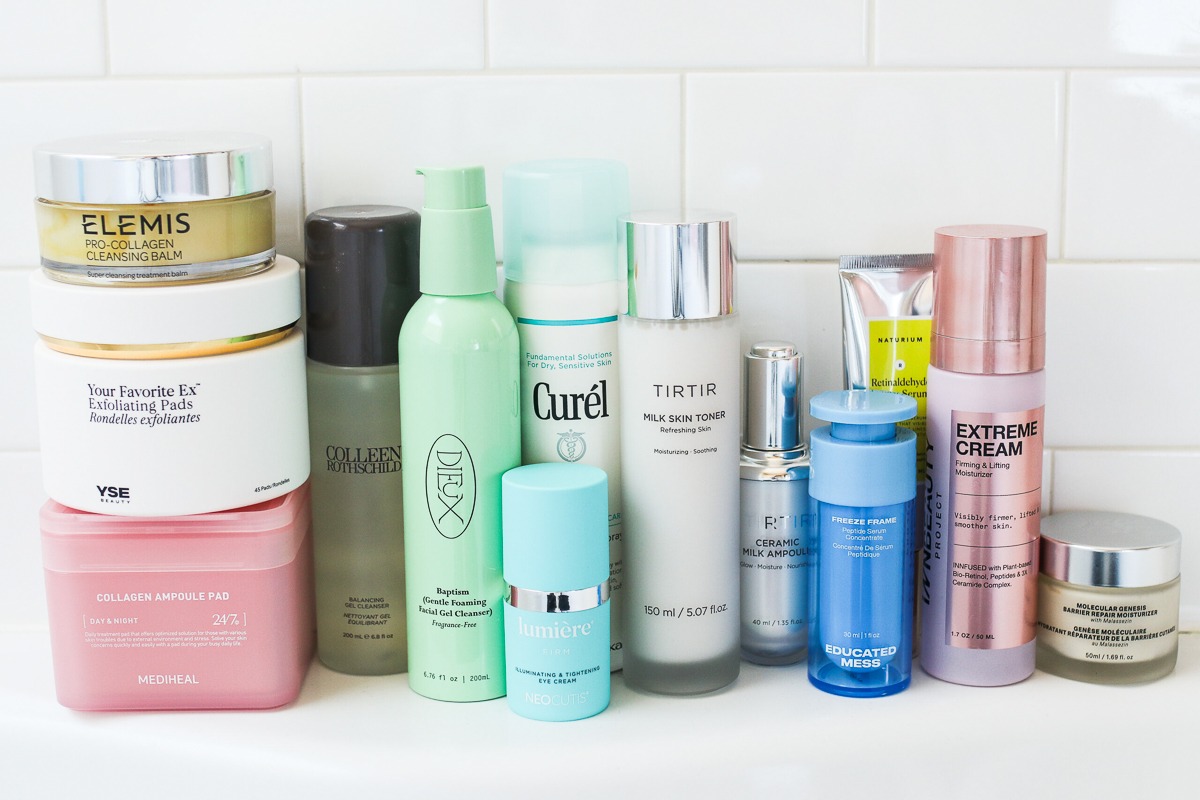
Exfoliation is always important for healthy skin but becomes even more so as we get older. Dead skin buildup happens more frequently as we age so it’s necessary to ensure you are exfoliating regularly. If you face looks dull, rough, or uneven, it could be from the presence of dead skin cells. Excess buildup of them can often prevent skincare products from working effectively, as well as clogged pores and texture issues. I’m going to share some of the best ways to remove dead skin from the face and the products I would recommend.
How To Remove Dead Skin From the Face
The skin naturally sheds dead cells, but this process can slow down due to age, environment, or improper skincare. Dead skin accumulation can block pores, cause breakouts, and create a dull appearance. Properly removing them is important but using the wrong method or frequency can damage the skin barrier. Understanding proper removal techniques is essential for long-term skin health.
What Are Dead Skin Cells on the Face?
Dead skin cells are the outermost layer of skin that naturally shed as part of the renewal cycle. This process typically occurs every 28 to 40 days, depending on age and skin condition. As we age, these cells remain on the surface because shedding slows down which can lead to buildup when not removed.
What Causes Dead Skin on the Face?
- Slower cell turnover due to aging
- Dry or dehydrated skin
- Harsh skincare products
- Environmental factors like sun exposure and pollution
- Lack of proper exfoliation
What Do Dead Skin Cells Look Like on the Face?
Flaky or peeling patches
Some flakiness or peeling can be caused from dryness but often times it can be from the buildup of dead skin cells.
Rough or uneven texture
If you struggle with rough texture on the face, adding in a regular exfoliant can help to address that almost immediately.
Dull or ashy appearance
If you are struggling with how to get a glow on your face naturally and without makeup, it may be a good idea to begin exfoliating to reduce that dullness.
Breakouts and blemishes
Excess sebum can build up on the skin clogging pores and causing breakouts.
Makeup sitting unevenly on the skin
One of the reasons that makeup may no longer be looking the same on your skin as it did years ago is because of excess dead skin buildup.
What Can Remove Dead Skin on the Face?
Physical Exfoliants
One of the most popular ways to exfoliate your skin is with physical exfoliants such as scrubs or products with a gritty texture. I am always hesitant to recommend these types of exfoliants to those with mature skin because it can easily damage the skin barrier. Even though your skin may immediately feel smooth after using a strong face scrub, it can cause more issues if done regularly. It’s important to choose a physical exfoliant that is gentle and always do a patch test first to see if your skin can tolerate it. The physical exfoliant I recommend that most is a washcloth. Using a damp washcloth when cleansing your face each night can be the best way to get that gentle manual exfoliation but in a way that won’t cause damage to the skin barrier.
Chemical Exfoliants
Chemical exfoliants are my preferred method of exfoliation especially for mature skin. It’s important to find an acid or formula that your skin prefers which can take some trial and error. When using any type of chemical exfoliant, start small and build up as needed. Some of my favorite chemical exfoliant options are exfoliating toners, peel pads and serums with an acid complex to address specific needs.
Enzyme exfoliants
If chemical or physical exfoliants are too harsh, enzyme exfoliants are a great alternative for sensitive skin. They formulations often use fruit-derived enzymes to help give a gentle exfoliation for the skin.
Professional treatments
If you are not sure where to start or need more aggressive treatments, it’s best to go to a professional and get a consultation on what procedures would suit your needs.
How To Get Rid Of Dead Skin From the Face
Cleanse with a gentle face wash
Ensure you are properly washing your face each night which should include double cleansing if you are wearing makeup or sunscreen. A nourishing cleansing balm is a great first step and be sure to follow it up with a gentle face wash tailored to your skin type.
My favorite cleansing balms that I always have on hand: Elemis Pro-Collagen Cleansing Balm (use code: MAREE20 to save), Remedy Derm Dissolve Cleansing Balm and Then I Met You Living Cleansing Balm (use code: MAREE10 to save)
I have a handful of cleansers that I like to use as my second cleanse that really give the skin a deep cleanse without stripping it. Here are my favorites: OneSkin Prep Facial Cleanser (use code: MAREE15 to save), Dieux Baptism Gentle Foaming Gel Cleanser and Experiment Beauty Plasma Wash (use code: MAREE15 to save)
Apply exfoliant based on skin type
Choosing an exfoliation method may take some trial and error. Not all exfoliants are suitable for all skin types so be sure to find formulations that work with your concerns. Some ingredients are best for oily skin or combination skin (typically beta hydroxy acids) while others are more suitable for dry skin. The most popular acids that are found in chemical exfoliants are lactic acid, salicylic acid, glycolic acid and mandelic acid.
Here are my recommendations for my favorite exfoliating toners: Pixi Glow Tonic Exfoliating Toner, Paula’s Choice BHA 2% Skin Perfecting Liquid and Eadem Cashmere Peel Liquid Exfoliant.
Peel pads are a great option that can deliver stronger results – here are some of my favorite: YSE Beauty Your Favorite Ex Exfoliating Pads (use code: MAREE30 to save), Elemis Dynamic Resurfacing Pads (use code: MAREE20 to save)
Exfoliating serums are another great way to use exfoliants in your routine though you should only use one exfoliant in your routine at a time. Here are three exfoliating serum recommendations to try: Versed Gentle Pore Clearing Serum, Dr. Whitney Bowe Exfoliation Night Serum and Shani Darden Lactic Acid Exfoliating Serum.
Avoid over-exfoliating sensitive areas
It’s always best to start small using an exfoliant one day a week to see how your skin will respond. You can slowly build up the frequency in your skincare routine but avoid over-exfoliating especially on any sensitive areas of the face. Try to avoid the eye area and parts of the face that begin to show irritation. If any redness, peeling or irritation develops, stop using all exfoliating products and allow your skin time to calm down by using only nourishing and hydrating products.
Follow with hydrating products
It’s important to use hydrating products when exfoliating so you can help keep the skin balanced. This could be in the form of a moisturizer or hydrating serum used in the same routine as your exfoliants.
These are three moisturizers I swear by to help nourish my skin: Dieux Instant Angel Lipid-Rich Firming Moisturizer, Experiment Beauty Molecular Mesh (use code: MAREE15 to save) and Mother Science Molecular Genesis Barrier Repair Moisturizer (use code: MAREESYE to save).
Here are three hydrating serums I regularly use and love: Experiment Beauty Super Saturated Serum (use code: MAREE15 to save), Dieux Deliverance 3-in-1 Repair Serum and Prequel Multi-Quench Plumping Hydration Serum.
Use sunscreen daily to protect new skin
Daily sunscreen use is always necessary but especially when you are regularly using exfoliating products.


Comments